Wednesday, 22 May 2013

Constraint-Induced Movement Therapy

It is a type of rehabilitation that increases activity of the upper extremity. Typically CIMT used to inhibit the unaffected arm in the patient with cerebral palsy (spastic hemiplegic) for most of the time while involving affected limb in a range of everyday living activity.

CIMT basically a technique applied when the child stops using his affected limb due to its unexpected activities. Child with spastic hemiplegic has less power on one side then other. He just doesn’t use his affected side due to its clumsy response and this neglecting behavior towards affected side make it more and more suppressed in activity. CIMT seeks to reverse this process.

As the result of engaging patient in repetitive activity of the affected limb brain develops new neural pathways. This change referred as cortical reorganization. This CIMT is more important in cerebral palsy with the child whose one limb is more affected then other.

CIMT may work on the damaged motor network. Although, due to the intensity of this treatment, patient who have suffered profound upper extremity paralysis from their condition are normally not eligible for constraint-induced upper extremity training.

Effect of CIMT is too good. It improves movement not only this improvement remains stable for months. This also increased functional activity of daily living of the affected limb. CIMT includes transfer package in this physiotherapist applies many strategies to make learn the activities outside the clinical setups. This includes first monitoring, needs to documents patients activity towards target behavior second problem solving, in which patient needs to solve problem of obstacles third one is behavior contracting, involves getting identify the components and methods carrying out normal behavior.

There are some limitations of the CIMT. If patient is not cooperative then it’s a great problem in CIMT, as patient is of severely affected. In case of balance problem CIMT process creates problem. In case of global aphasia and cognitive problem, communicating problem may be phased. CIMT technique is intensity based if patient can tolerate this intensity then its good otherwise it creates a problem. Lack of facility is also a great problem faced by patient and therapist. Combination of therapy and CIMT shows better result its unknown till. Over all CIMT is very beneficial and result giving. So its use is more in hemiplegic Childs.

Sunday, 12 May 2013

Vocational Training


Vocational education is based on occupation and employment. Vocational education is education that prepares people for specific trades, crafts and careers at various levels from a trade, a craft, technician, or a professional position in engineering, accountancy, nursing, medicine, architecture, pharmacy, law etc. Craft vocations are usually based on manual or practical activities, traditionally non-academic, related to a specific trade, occupation, or vocation.

Vocational education may be classified as teaching procedural knowledge Increasingly, vocational education can be recognized in terms of recognition of prior learning and partial academic credit towards tertiary education (e.g., at a university) as credit; however, it is rarely considered in its own form to fall under the traditional definition of higher education.

Vocational education has diversified over the 20th century and now exists in industries such as retail, tourism, information technology, funeral services and cosmetics, as well as in the traditional crafts and cottage industries.

Vocational training in India is provided on a full-time as well as part-time basis. Full-time programs are generally offered through I.T.I.s industrial training institutes. The nodal agency for grant the recognition to the I.T.I.s is NCVT which is under the Min. of labor, Govt. of India. Part-time programs are offered through state technical education boards or universities who also offer full-time courses. Vocational training has been successful in India only in industrial training institutes and that too in engineering trades.

There are many private institutes in India which offer courses in vocational training and finishing, but most of them have not been recognized by the Government. India is a pioneer in vocational training in Film & Television, and Information Technology. AFT. Maharashtra State Government also offered vocational Diplomas in various Trades.

Vocational Higher Secondary schools are under MHRD in India. All the state governments run vocational schools. In kerala state 389 vocational schools are there with 42 different courses. Commerce & Business, Tourism, Agriculture, Automobile, Air conditioning, Live stock management, Lab Technician are some prominent courses.

In India vocational training also runs on private and on the NGO’s basis. Disables were given this training to make them capable to earn their livings. Vocational training given to these disables was like making candles, knitting, sewing, incense sticks,  paintings, etc. which they can do. These can help them to make them earn in this world. Various kinds of disables can do different kinds of work according to their disability.

Vocational training is must in rehabilitation. Complete rehabilitation means to prepare a disable into a capable person and execute in outside world. 

Sunday, 31 March 2013

Maintain a Perfect Balance its Good Health

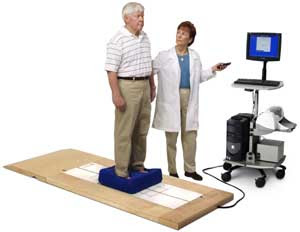
The ability to control the center of gravity over the base of support in a given sensory environment. In another word is the ability to maintain normal alignment relationships between the various body segments and between the body and environment. Balance is the condition in which all the forces acting on the body are balanced such that the center of mass is within the stability limits, the bound-Aries of the base of support.

Balance tests
Functional balance tests

Functional tests of balance focus on the maintenance of posture (static balance), balance during weight shifting or voluntary movement (dynamic balance),balance response to manual perturbations, and functional mobility (gait)examples of static balance tasks in standing include double limb stance, single limb stance, tandem stance, and the Romberg test.

Dynamic balance tasks include sit to stand and sit down, reaching movements; turning, and step-ups. Walking tasks include timed walking, walking with commands to turn direction (180 or 360 turns), turn the head (side to side or up and down), or stop and start. Scoring can vary from a simple subjective scale (impaired or intact) to a scale with specific criterion description for successful performance. The objectivity of measurement can be used to document time in balance during a 30 second trail of a single limb stance.

Romberg test

Is used to determine proprioceptive contributions to upright balance. The patient is instructed to stand with feet together, eye open unaided for 20 to 30 seconds. If patient falls with eyes open, the test is over. The patient is then asked to stand with eyes closed. In a negative test these is only minimal sway. If the test is positive, the patient is able to stand eyes open but demonstrates increased instability or falls with eyes closed.

It is important to tell the patient you are prepared to catch him or her in event of a fall. Positive Romberg test is indicative of a loss of proprioception that can occur with posterior column lesions in the spinal cord and peripheral neuropathy. In the sharpened Romberg test, the feet are placed in tandem (heel-toe position) and the eyes open to eyes close condition imposed.

Multidirectional reach

In this we can measures how far an individual can reach in the forward, backward, and lateral directions. For forward beyond arm’s length while maintaining a fixed base of support in the standing position. The test uses level yard stick mounted on the wall and positioned at the height of the patient’s acromion. The patient stands sidewards next to the wall( without touching) feet normal stance width and weight equally distributed on both feet, the shoulder is flexed to 90 and elbow extended with the hand fisted.

An initial measurement is made of the position of the 3rd metacarpal along the yard stick for forward, the patient is instructed to lean as far forward as possible without losing balance or taking a step. For lateral reach, the patient faces away from the wall and reaches sideways to the right as far as possible. The therapist records functional reach in inches for all three trials and then averages the three trials.

Berg balance scale

The scale consists of 14 functional task commonly performed in everyday life. The item range from sitting or standing unsupported, to movement transition, variations in standing position, feet together, forward reach, retrieving an object from the floor, turning standing on one foot to placing the foot on a stool. The first five items are considered basic balance items while the last nine items are considered more advanced balance tasks.

Efficacy scale

Is a self report measure that examines how confident an individual feels while performing items of daily functional mobility and ADL tasks both with or without assistance (household).